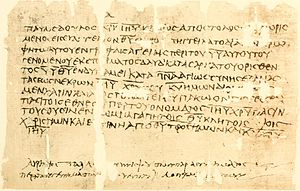
Paul’s epistle to the church at Rome starts with a lengthy
greeting which includes the gist of the Gospel and how Paul is connected to
them by the Gospel and how Paul is commissioned by the Jesus of the Gospel to
be his apostle. The main intention of Paul seems like he wants his readers to
know that this letter carries apostolic authority. Paul has not been to Rome or
to the churches in Rome. He is introducing himself as the apostle to the
gentiles, who has been called to take the Gospel to the non – Jewish people of
his times. His aim is to reach Spain, the very end of the Roman Empire and
plant the Church of Jesus there. But in the meantime, he wants to fulfil his
calling by writing to the Roman Church, which is on the way to Spain. He has an
obligation to make clear the contents of the Gospel(chapters 1-4), it’s privileges
and responsibilities (chapters 5 -8), how God has brought the Gospel into the
world both to individuals and to communities (Chapter 9 – 11) and how Gospel
works out in the life of those who have been called into it (11 – 16).
Like any other introduction, this letter has a ‘who is
writing’ and a ‘who will be reading’ parts. Who is writing this letter? Paul,
of course. But who is Paul? He is an Apostle, who has been set apart by God for
a special cause. What is an Apostle? An apostle is a messenger. What is his
message? The good news about Christ. Who is this Christ? He is according to his
human genealogy, a descendent of King David and who in the spirit is the Son of
God –in power, in whom God has vested all power and authority. This was
declared or pointed out most explicitly by his resurrection from the dead. All these details about Jesus were declared beforehand by prophets, through whom Jesus was promised, as God's expression of love for humanity. Jesus
had specifically called Paul to be his apostle. He has been called,
commissioned and consecrated by God to take the good news of Jesus to the non –
Jewish people. This includes the people in Rome, the church to whom this letter
is addressed. God loves these Romans and is called them out to be saints. As
opposed to Rome, which was filled with sinners, the members of church in Rome
were called to be saints. God loves them and therefore they who have received
his love were called to reflect his goodness, holiness and love.
The conventional greeting included ‘Grace’ which means ‘unmerited
favour from God’ and ‘peace’ which is the Hebrew ‘shalom’, indicating wholeness
and prosperity in everything. These blessing flow from God, the benevolent
loving father and his Son Jesus Christ, who is the Lord or ruler of all
creation. Only those who are in right relationship with God can have these blessings.
The Gospel is the call of God to that right relationship with him, the call of
love from the creator to his creation to repent and be reconciled to him
through Jesus.
NT Wright in his book, "Jesus and the Victory of God", enumerates five questions asked by Jesus scholars of "The Third Quest" in Jesus studies.
1. How did Jesus fit into Judaism of his day?
2.What were his aims?
3.Why did he die?
4. How did the early church come into being and why did it 5ake the shape it did?
5.Why are the gospels what they are?
I remember reading the epistle or letter of the Apostle Paul to the Romans as a boy. I remember reading Romans 7 and getting confused at Paul's difficult arguments and flow of thought. Bible reading was a ten minute ritual which my parents insisted I perform every morning. Then as a student in medical college, the practice was stressed and quiet time and private interpretation became the norm for me. The epistle to the Romans came alive after every failure or defeat as Romans 8:28 was quoted to help me get perspective of my failure or defeat.
Romans 8:28
New International Version (NIV)28 And we know that in all things God works for the good of those who love him, who[a]have been called according to his purpose.Footnotes:
Romans 8:28Or that all things work together for good to those who love God, who; or that in all things God works together with those who love him to bring about what is good—with those who
As a first year student in medical college, the verse which inspired me most was Romans 1:1.
Paul, a servant of Jesus Christ, called to be an apostle, separated unto the gospel of God,
I wrote it on the front page of my prayer note. This prayer note was used to jot down prayer points for personal and student fellowship prayer meetings.
It just inspires me even now, every time I read it, especially these phrases: "separated unto the Gospel", "slave of Jesus Christ". Then as I read the New Bible Dictionary, I read and understood that as a fish is enslaved to water and finds it's freedom in this enslavement, so a man as "a slave of Christ" is free. As the fish was created to live in water, man is created to live in Christ. As a fish outside the water would die, so a man who is not in Christ is dead spiritually. So the the phrase "slave of Christ" was a very positive concept which I found liberated me from many human ailment. In Christ I was free to be what created me to be, to be his image bearer, to reflect his goodness and holiness, to enjoy the relationship with God. It liberated me from "the heavy chains of human opinion". Life became more and more integrated as everything was done in and for Christ. Thus God in Christ saved me from compartmentalization and disintegration and this led to more focus and impact in my witnessing. To live in Christ and live for Christ is the natural habitat of man and the purpose of his creation. This truth about the purpose of my life was made clear to me from other scriptures like Colossians 1
6 For in him all things were created: things in heaven and on earth, visible and invisible, whether thrones or powers or rulers or authorities; all things have been created through him andforhim.
That 'for him' confirmed that I was created for Christ and "to be separated for God and Gospel of Christ", is the natural environment for me.
As years rolled on, I found myself in Ukraine, living with a missionary and doing my post-graduate residency in Radiology. As I travelled in public transport from home to hospital and back, I used my ipod and audio bible to listen to the Gospel of Romans. This I did innumerable times and this exercise really helped to understand the flow of thought of the book of Romans. Before my advent to Ukraine, I has repeatedly listened to David Pawson's 'Unlocking the Bible Series'. The Romans section of the lecture gave me a good understanding of the 'shape of the letter' as he would say. This plus the repeated listening to large chunks of the epistle of Romans at a stretch helped me to understand (imperfectly) what the Apostle was trying to communicate.
https://www.youtube.com/watch?v=6suQOvlHa_U (David Pawson's Romans)
In the years preceding my visit to Ukraine, I became a Calvinist for a year or so and then became an Arminian once again. I read the Calvinist side of the argument, the Arminian side and the now popular Molinist versions. During this time of being 'tossed about by doctrines' I started focus on you know what. Yes, Romans 9, 10 and 11 dealing with the intensely debated online topics of 'God's Sovereignty and Human Responsibility'. I have blogged my thoughts on these chapters and these can be retrieved from this blog itself. I was inspired by the fact the it was while reading of Luther's "Introduction to the Epistle of Romans" that John Wesley himself had his Alders gate experience and went out and changed the world for Christ.
Now I have started studying the epistle to Romans again. This time I have to study one Chapter per month. I have started with chapter one. I am very good in starting and then leaving it off. I hope this does not enter that category. This time I am taking the aid of commentaries, ranging from Adam Clarke, N.T Wright, Luther, Calvin, Wesley, Barth, Gill, Robertson, Jamieson - Faucet - Brown, NET bible notes and many more. I hope to blog as I learn and share with you whatever God teaches me, through this study. I request your prayers that this project will be a blessing to me and you. God bless. Soli Deo Gloria!
1. Justifying sin with God's grace n love
2. Comparison - everybody does it
3. Evasion - ignore the fact n refuse to face your sin.
4. Excuses - Ignorance, weakness, lack of understanding, habit
The Kingdom is further compared to a treasure which a man accidentally stumbles upon and a pearl of great price which a man pursues. Either case the Kingdom is something costly and of tremendous value, though some accidentally stumble over it and others seek and find it. In both cases the person recognizes it's great value. At once he makes arrangements to acquire it. He sells everything he has and acquires the land containing the treasure or the pearl of great value.
So it is with the Kingdom. In order to enjoy it's greater treasures and greater value it brings to our life, we have to part with the comparitively cheaper things which we have acquired in this world. This exchange is essential for enjoying the treasures and joys of the Kingdom of God. Those who acquire spiritual treasures do so sacrificing the worldly and sinful ones. The parting with the one to acquire the other; the pating of the lower to acquire the higher; the parting of the earthly to enjoy the heavenly; the parting of the temporal to enjoy the eternal is as natural as giving up smoking and junk food for a healthy life.
The mustard seed is the smallest of seed but grows into a large plant. It was one of the largest garden plant on which birds could perch and take rest. Similarly the kingdom of God also has a small and obscure beginning. But it keeps growing and attains greatness as the largest of Spiritual movement in the world. It will also provide shelter and home to many. What started with Jesus, the one man, has now now grown into the largest spiritual movement in the world. The Church, para-church organizations and individual believers find make their eternal home in the kingdom of their father, God. Now the Kingdom is still growing and this parable prophecy is being fulfilled already, finds partial fulfillment as recorded in the annals of history. By the time Jesus comes back this prophecy will be perfectly fulfilled. The theme of the parable: Kingdom grows from obscurity to significance.
The Parable of the Yeast
13:33He toldthemanotherparable: “The kingdomof heavenislikeyeastthata womantookand mixedwith49threemeasures50of flouruntilallthe dough had risen.”51
https://net.bible.org/#!bible/Matthew+13:31
"The leaven permeates all the "wheaten meal" (aleurou) till the whole is leavened." - Robertson Word Pictures of The New Testament The leaven or the yeast is a living organism. It permeats the dough and transforms it. Similarly, the Kingdom of God will permeate the world, it will spread like leaven in a dough. As it spreads it will transform it. The World as it is today with all it's scientific and technological advances, individual freedoms, education system, nationhood etc have been build on the foundation of the Gospel of Christ and the worldview it furnished the people. The reason why culturally Christian countries are much better and preferred than culturally Islamic, Buddhist or Hindu countries is because the leaven of the Gospel has had it's effect. Even Human rights charter and the reconciliation movements are backed by theologies which are derived from the bible. Peace and prosperity is made possible by the leaven of the Gospel, whose God commanded human flourishing and dominion over the creation under human stewardship. The leaven continues to spread and transform. The Gospel as it arrived in cannibalistic Oceania and headhunting tribes of the northeast India and the savages of Europe transformed them into civilized people. The work goes on. Civil rights movements and the non-violent Gandhian movement for Indian independent were all fully influenced by Christ and his teachings. It as the leaven of the Gospel spreads it is transforming communities, cultures and civilizations as Jesus taught in this parable.
The Gospel of Matthew, chapter 13 records a series of parables pertaining to the Kingdom of God. They talk about different aspects of the Kingdom of God. Kingdom of God refers to God's rule among men. The greek word for kingdom is 'basileia'. It indicate the exertion of God's rule, authority and sovereignty and not geography. [1]http://www.colsoncenter.org/the-center/columns/indepth/15062-jesus-christ-and-the-kingdom-of-god "So, then, from this brief study, we see that the expression “Kingdom of God” does not refer to heaven or the church or the heart or to moral reform or to a future realm. Rather it refers to the active, dynamic exercise of God’s rule, authority, dominion, and power in the world!" [1] So these parables in Matthew 13 are regarding the rule, power, authority and dominion of God in this world. The first two parables uses seed and how they behave. One of the important aspect of the seed is it's potential. Even though it is small it can over time give rise to a large tree like banyan tree. It has in it the code for growth transcribed in it's DNA. But for the seed to grow favourable conditions are necessary. The soil, climate, water and a sower are necessary. Here the sower is Jesus and then everyone who preaches and publishes by any means the message of Jesus, the Gospel. The sowing may happen through literature including books, e-books, internet websites, tracks, magazines; audio including preaching, sharing, debates, lectures; Videos including you tube videos, movies, DVDs. The focus of Jesus' first parable is the land in which the seed is sown. Here the land refers to people. The pathway refers to people without understanding. From these Satan easily takes away the seed. Without understanding neither the importance of the message and content of it, people are prone to neglect it. Imagine a treasure trove containing ancient manuscripts. If the man possessing it does not understand it's worth or it's importance he will neglect it and treat it like any other piece of old crap. If a man who understands the importance of the manuscript gets hold of it, then reaches a museum and enters the halls of scholars for further research. If we do not understand something we cannot determine it's importance. We are more prone to neglect it because of our lack of understanding. The same applies here. When the word is communicated certain people don't understand or perceive it's importance because of prejudice and other sins, Satan takes away the message from their mind. He keeps them focused on what they were already pursuing. Thus the seed or word, the potential bearer of the kingdom of God does not have any effect on their life.
The rocky soil refers to people with hardened heart, who have willfully allowed sin to take hold of them, who justify sin or trivialize sin and evil. These people receive the word with joy, but the Gospel message does not take root deeply. It grows a little and when difficulties, pressures and persecution comes, they perish spiritually. They give up the Gospel under pressure, in stead of their sin, in stead of their life. Their acceptance of the gospel was real but not sustained. The thorny soil are those allow the cares of this life and the deceitfulness of wealth to choke their Spiritual life. The worry about future, worry about security, worry about being accepted by society and family, valuing wealth and material possession above God's Gospel values and principles. They could not accept the radical claim of the message to abandon one self to God alone for everything. They find it difficult submit to God and allow him to run their life. They try to settle the issues of life their own way, thus they contradict the word of God. The word of God and the message of the Gospel dispels all worry and sets a person up to pursue God and his kingdom. They pursue wealth as against God's kingdom and his righteousness. The deceitfulness of wealth makes them think falsely that the more the money, the better the life and security. Their trust in money keeps them from trusting God. Thus they fail to live according to the teaching of Christ and bear fruit. Their failure to accept and live out the word of God, which they do understand makes them barren and unproductive spiritually. These people need to repent and trust God and entrust their lives to God, if anything spiritually good has to come out of them. The good soil refers to people who understand, accept and live out the Gospel. They submit to the word of God and it's demands. They allow God to work on them and take away anything that is stopping them from living out the word and bearing fruit. These people bear fruit and a harvest and allow the potential seed of the word of God to bring out it's potential, power and effect into this world. This is how the kingdom of God grows. The rule of God extends through every obedient Child and it is hindered in people with lack of understanding, lack of strength and courage and lack of full trust and submission to God. The next parable immediately following this, talks about two different types of seed. One is the good seed and the other is weed seed or darnel. The darnel looks similar to wheat in it's early stages of development. The agents of God sow wheat and when they are asleep, the enemy sows darnel among them. Gospel is preached and false gospel is also preached. People accept whatever they want and in the early stages of a true Christian man's spiritual life, he does not look much different from any other man. But as the days go by, the one who received the seed grows and bears good harvest and the one who accepted the darnel produces more weeds, useless for consumption. So in order not to hurt the good ones, the master of the field, God, commands his agents to allow both the seeds and the weeds to grow side by side so that what cannot be differentiated in the beginning can be separated at the time of harvest. The wheat will be stored in barns and the weeds will be destroyed by fire. The true Christian and follower of God will enter the presence of God and the unbeliever and follower of falsity, religious or irreligious will be consumed by fire of God's judgement. Thus the kingdom of God grows among the weeds of the enemy. We as believers have to wait till the end as some of the weeds may be saved and tranformed into wheat. Hold your judgement for God is at work. He will separate the weeds only at the end. He has allowed the weed to grow among the wheat so that the weed can know and seek the truth and become wheat, useful and effective in fulfilling the purposes of God.